MEMPHIS, Tenn. – Paper plays a foundational role in U.S. history, including the fight for liberty during the American Revolution. As America marks its 250th anniversary, Sylvamo, the world’s paper company, is highlighting the product that helped shape a nation.
Spreading Revolutionary Ideas
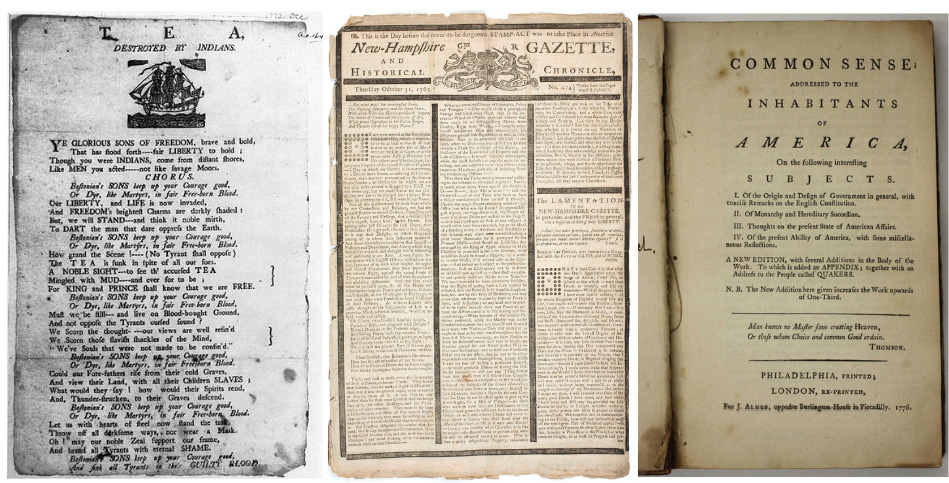 From left, a broadside commemorating the Boston Tea Party, a New Hampshire Gazette notice announcing provisions of the Stamp Act and the title page of Thomas Paine's Common Sense (1776). Images courtesy of the American Antiquarian Society and Robert D. Farber University Archives & Special Collections, Brandeis University
In the years leading up to the Revolution, newspapers played a vital role in sharing information and shaping public sentiment. Publishers exchanged articles and essays across the 13 colonies, fostering shared conversations around local grievances and drawing attention to pivotal revolutionary moments, including the Boston Massacre and the Boston Tea Party.
In 1765, the Stamp Act, imposed by the British Parliament, struck at that exchange by becoming the first direct tax on the American colonies, requiring payment on printed materials. Paper became a symbol of protest, and the act united the colonies in defiance under the rallying cry: "No taxation without representation."
In 1776, Thomas Paine’s “Common Sense” helped sway public opinion toward independence. The pamphlet argued for separation from Great Britain and circulated widely throughout the colonies, selling roughly 120,000 copies.
Without paper, these ideas for an independent nation may not have become a revolutionary movement.
Documenting Independence and Self-Governance
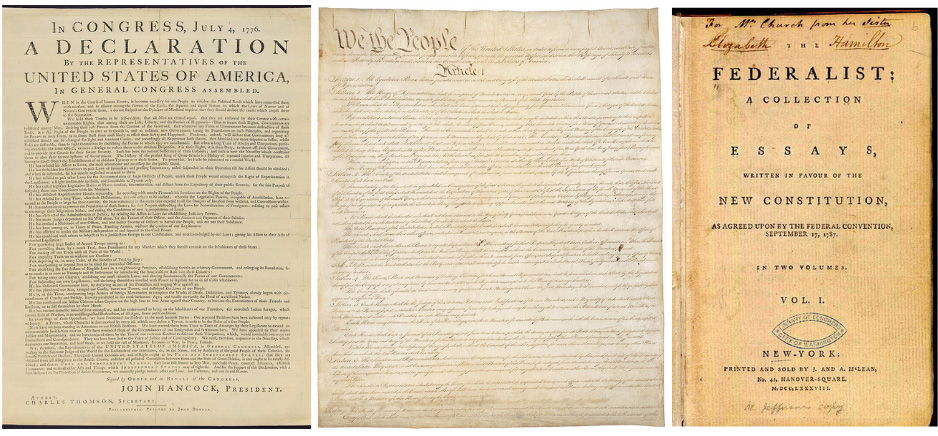 From left, a printed copy of the Declaration of Independence, the first page of the U.S. Constitution and the title page of the first volume of The Federalist (1788). Images courtesy of the Library of Congress and Google Books.
Paper did more than spread the idea of independence. It helped declare and document it. On July 4, 1776, the Declaration of Independence announced America’s separation from Britain. The Declaration was distributed throughout the colonies, becoming one of the most influential documents in history.
After the declaration, the 13 original states drafted the Articles of Confederation, the nation’s first governing framework. It soon became clear the new system would not work, prompting delegates to write the U.S. Constitution, the framework that still governs the country today.
Ratification of the Constitution was far from certain. Through a series of newspaper essays known as “The Federalist Papers,” Alexander Hamilton, James Madison and John Jay defended the proposed government, helping build support for ratification.
From the first protest pamphlet to the Constitution, paper has been fundamental to U.S. history, serving as a catalyst for revolutionary ideas, driving democratic discourse and documenting principles that guide the country 250 years later.
See how Sylvamo's brand, Hammermill®, is commemorating the occasion and celebrating paper's enduring role in helping make history.